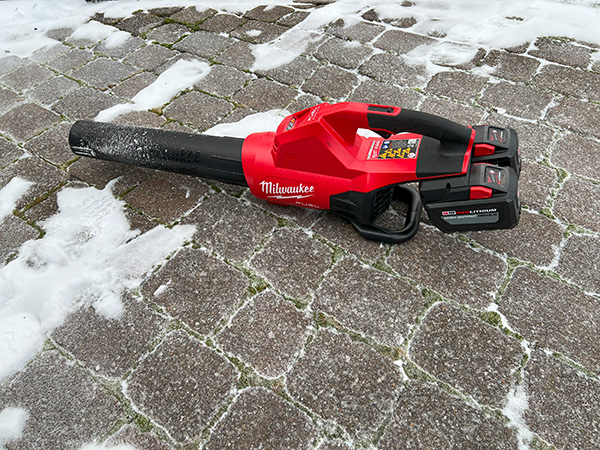
The ongoing debate centers on efficiency versus physics. In theory, moving snow with high-velocity air is the ultimate labor-saving hack. In practice, the success of this technique is entirely dependent on the "mood" of the weather. As we move through the 2025–2026 winter season, field tests have finally drawn a clear line between where these tools shine and where they fail.
"A cordless blower is a precision instrument for winter maintenance, not a brute-force solution. Understanding the moisture content of the snow is the difference between a cleared walkway and a frustrated morning."
The Ideal Scenario: The "Powder" Factor
To understand the effectiveness of a tool like the Milwaukee M18 FUEL Dual Battery Blower, you have to look at the snow itself. Cordless blowers excel in one specific condition: light, dry, powdery snow. We are talking about a thin dusting-typically two inches or less-that has fallen in cold, dry temperatures and has not yet been compacted by foot traffic or tires.In these conditions, the high CFM (Cubic Feet per Minute) of a professional-grade cordless blower can clear a walkway in seconds. It is a game-changer for clearing off the roof of a car, blowing out the tracks of a sliding glass door, or tidying up a porch where a shovel would be too clunky. For the elderly or those with back concerns, it offers a nearly effortless alternative to the repetitive lifting and twisting of manual shoveling.
Where the Physics Fail: Heavy, Wet, and Trodden Snow
The limitations of cordless technology become apparent the moment the temperature rises near the freezing mark. "Heart attack snow"-the heavy, wet, slushy variety-has a high water content that makes it incredibly heavy. Even the most powerful 18V or 36V blowers on the market generally lack the static pressure to "lift" this type of snow once it has settled.Furthermore, once snow has been trod upon, it compresses into a layer of bond-to-pavement ice or hard-pack. At this stage, air velocity is useless. You are no longer dealing with loose particles; you are dealing with a solid mass.
Performance Matrix: Cordless Blower vs. Traditional Tools
| Snow Type | Cordless Blower | Manual Shovel | Gas Snow Blower |
|---|---|---|---|
| Light Powder (< 2") | Excellent / Fast | Overkill / Slower | Unnecessary |
| Deep Powder (> 4") | Moderate / Slow | Strenuous | Excellent |
| Wet / Slushy Snow | Poor / Ineffective | Effective but Heavy | Excellent |
| Compacted / Icy | Fails | Requires Scraping | Variable |
Pro-Tips for Winter Blower Use
If you decide to incorporate your leaf blower into your winter routine, there are several professional strategies to maximize your success:- Clear Early and Often: Don't wait for the storm to end. If six inches of powder are forecasted, go out every two inches. It is much easier for a blower to move thin layers than a single deep drift.
- Check the Wind: Always blow with the wind, never against it. Even a slight breeze can catch the snow you've just lofted into the air and plaster it right back onto your cleared path (or your face).
- Protect Your Batteries: Lithium-ion batteries hate the cold. Keep your batteries inside the house until the moment you are ready to work. Running a cold battery reduces power output and significantly shortens your runtime.
- Consider the Surface: While blowers are safe for most surfaces, they can displace loose gravel or decorative mulch. For delicate wooden decks, a soft-bristle broom is often a safer secondary tool to avoid scratching the finish.
The Verdict: A Complement, Not a Replacement
Is the cordless leaf blower a "snow blower"? No. It lacks the mechanical auger and discharge chute necessary to handle the heavy lifting of a true winter storm. However, it is an essential companion tool. Think of it as the "finishing tool" of your winter arsenal. It handles the stairs, the car, and the light dustings that aren't worth the effort of starting a gas engine or straining your back with a shovel.As cordless motor technology continues to improve-with brands like Milwaukee and Ryobi pushing for higher CFM ratings every year-we may see a future where these tools handle more, but for the 2026 season, keep your shovel leaning against the wall just in case.
The Bottom Line: For the light stuff, it’s a miracle tool. For the big storms, it’s just an expensive fan. Use it strategically, and you’ll save yourself hours of backaches this winter.
Comments 0
Leave a Comment