The story of the Gorilla Ladders Easy Reach Step Stool recall is not simply a tale of a defective product. It is a window into the larger and critically important world of consumer product safety regulation, a world in which the CPSC operates as a quiet, often underappreciated guardian of public well‑being. Every year, thousands of products are recalled in the United States, ranging from children's toys with choking hazards to automotive components that could cause a loss of control, from kitchen appliances that pose a fire risk to—yes—ladders and step stools that can break. The vast majority of these recalls happen without fanfare, without national news coverage, and without the knowledge of the consumers who own the affected products. The recall notice is posted on the CPSC website, the manufacturer sends a press release, and perhaps a small article appears in the back pages of a trade publication or on a consumer advocacy blog. But the consumer who bought the step stool at Home Depot six months ago, who has been using it happily and without incident, who never registered the product and never thought to check whether it had been recalled—that consumer continues to use the product, unaware that each climb is a risk. The purpose of this article is not merely to report on a decade‑old recall for historical interest. It is to illustrate, through the lens of one specific product failure, the anatomy of a consumer product recall: how the defect was discovered, what consumers should do if they own a recalled product, how the recall system works (and sometimes fails to work), and what lessons can be drawn by manufacturers, retailers, and consumers alike. Because the Gorilla Ladders Easy Reach Step Stool recall may be old news, but the principles it illustrates are timeless. Every year, new products are recalled for similar reasons, and every year, consumers remain unaware that the ladder in their garage or the step stool in their pantry could be a hidden danger. Understanding how to find, interpret, and act upon recall information is a skill that can literally save a life.
The Product: What Was the Gorilla Ladders Easy Reach Step Stool?
Before examining the defect and the recall, it is essential to understand what the product was and why it was popular. The Gorilla Ladders Easy Reach 3‑Step Pro Series step stool, model HB3‑PRO, was a compact, lightweight, and affordable household tool designed to give users a safe boost to reach high shelves, change light bulbs, paint ceilings, hang decorations, and perform the thousand other tasks that require a few extra feet of elevation. It featured a steel tubular frame—a material choice that conveys strength, durability, and industrial‑grade reliability—with three plastic steps and a plastic‑molded tool holder integrated into the top platform. The tool holder was a thoughtful touch, allowing the user to keep a screwdriver, a pair of pliers, or a paintbrush within easy reach while working. The combination of steel and plastic kept the stool light enough to be easily carried from room to room, yet substantial enough to inspire confidence. The label on the underside of the middle step stated clearly that the stool was rated to support 225 pounds—a capacity that encompasses the vast majority of adult users. It was sold exclusively at The Home Depot, one of the largest and most trusted home improvement retailers in North America, for the accessible price of about $27. For the average homeowner, this was an appealing product: affordable, sold by a reputable retailer under a recognizable brand name (Gorilla Ladders, a division of Tricam Industries), and seemingly well‑constructed. The purchase decision was easy. The trust was implicit. And for most of the 84,000 consumers who bought the HB3‑PRO between April and August of 2012, that trust was not misplaced. Their step stools functioned as intended, providing a stable, secure platform for countless household tasks. But for at least five consumers, the trust was broken—literally.
The defect, as described in the CPSC recall notice, was straightforward and terrifying: "The top step/standing platform can break, posing a fall hazard to consumers." The failure mode was not a gradual weakening that gave warning signs—creaking, flexing, cracking sounds—before letting go. It was a sudden, catastrophic break. The plastic top platform, the very surface on which the user stood, could fracture under load. The steel frame might remain intact, but the platform that supported the user's full weight would give way, dropping them through the stool. The five reports received by Tricam Industries described exactly this scenario. One of those reports included scrapes and abrasions—minor injuries, in the grand scheme of things, but injuries nonetheless. In a different set of circumstances—an older user with brittle bones, a user balanced precariously while holding a heavy object, a user standing on a hard, unforgiving surface—the outcome could have been far worse. The fact that only minor injuries were reported is a matter of luck, not of design. The CPSC, Tricam Industries, and The Home Depot acted before luck ran out. But for the 84,000 consumers who owned the product, the recall notice represented a crucial piece of information that they might never receive.
The Recall Mechanism: How the CPSC and Tricam Industries Responded
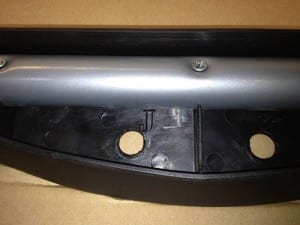
The recall was issued voluntarily by Tricam Industries, in cooperation with the CPSC. This is an important distinction. Not all recalls are voluntary; the CPSC has the authority to issue mandatory recalls if a manufacturer refuses to cooperate, but the vast majority of recalls are negotiated between the CPSC and the manufacturer and are announced voluntarily. The voluntary nature of the recall does not mean the manufacturer admitted fault or liability—standard legal disclaimers always apply—but it does indicate a willingness to address the problem without being forced to do so by government action. The recall notice, published on the CPSC website and distributed to media outlets, contained all the information a consumer needed to determine whether their step stool was affected. The model number, HB3‑PRO, was located on the underside of the middle step on a blue label. Recalled units had a "J" stamped into the underside of the top step and/or the underside of the tool holder. This simple, clear identification method was critical. For a consumer standing in their kitchen, looking at a step stool that might or might not be part of the recall, the presence or absence of a stamped "J" was the difference between safety and risk. If your step stool had the stamp, you were instructed to stop using it immediately and contact Tricam Industries for a full refund. Tricam set up a toll‑free hotline—(855) 336‑0360—operating from 8 a.m. to 5 p.m. Central Time, Monday through Friday. Consumers could also visit the Gorilla Ladders website at gorillaladders.net and click on "Recall" for more information. The remedy was straightforward and consumer‑friendly: a full refund. Tricam did not offer a repair kit, a replacement part, or a coupon toward a future purchase. They offered to give you your money back. This is notable because many recalls, particularly those involving large, complex products, offer a repair rather than a refund. A lawn mower with a defective blade may be repaired at an authorized service center. A car with a faulty airbag may have the airbag replaced. But for a $27 step stool, the economics of a repair simply do not make sense. The cost of shipping a replacement part, or of staffing a repair center, would exceed the value of the product. A full refund was the simplest, most consumer‑friendly solution, and it ensured that affected consumers were made whole without additional expense or inconvenience. The Home Depot, as the exclusive retailer, would have been notified of the recall and would have removed any remaining inventory from their shelves. Consumers who attempted to return the product to The Home Depot rather than contacting Tricam directly would likely have been directed to the manufacturer, as is standard practice for recalls that offer a manufacturer‑administered refund rather than a retailer‑administered return.
The Anatomy of a Structural Failure: Why Did the Platform Break?
The CPSC recall notice does not provide a detailed engineering analysis of why the top platform on the HB3‑PRO failed. It simply states that it could break, and that it did break, on at least five occasions. But based on what we know about the product—a plastic‑molded platform on a steel frame—we can make some educated inferences about the likely failure mechanisms, and those inferences are instructive for consumers who want to understand what makes a safe step stool and what red flags to look for. Plastic is an extraordinarily versatile material, but it is not a single substance with uniform properties. There are hundreds of different types of plastic, each with its own strengths, weaknesses, and failure modes. The plastic used in a step stool platform must be strong enough to support the rated weight, stiff enough to resist excessive flexing, tough enough to withstand the occasional impact (such as being dropped or knocked over), and resistant to environmental degradation from sunlight, temperature changes, and household chemicals. It must also be moldable into a complex shape with ribs, gussets, and other reinforcing features that distribute stress and prevent concentration at any single point. A failure in a plastic step stool platform can occur for several reasons. The plastic itself may be defective—a batch of raw material that was contaminated, improperly mixed, or inadequately dried before molding. The mold may have been incorrectly configured, resulting in a part that is thinner than designed in critical areas. The molding process may have been rushed, leading to incomplete filling of the mold, internal voids, or residual stresses that cause the part to crack under load. The design itself may be flawed—a shape that concentrates stress at a sharp corner, a rib pattern that does not adequately support the load, a material specification that is marginal for the intended use. Or the failure may be a combination of factors: a design that was safe under ideal conditions, combined with a manufacturing variation that pushed a particular batch of products over the edge into unsafe territory. The "J" stamp on the recalled units provides a clue. This stamp was likely a mold cavity identifier—a letter or number stamped into each part that tells the manufacturer which specific mold, or which specific cavity within a multi‑cavity mold, produced that part. In plastic injection molding, a single mold can have multiple cavities that produce identical parts simultaneously. If one cavity is worn, damaged, or incorrectly machined, the parts it produces will be different from the parts produced by the other cavities in the same mold. By stamping each part with a cavity identifier, the manufacturer can trace a defect back to a specific cavity and determine whether the problem is limited to that cavity or affects the entire mold. The fact that the recall applied only to units with a "J" stamp suggests that Tricam Industries had traced the failures to a specific mold cavity, and that units produced by other cavities were not affected. This is a targeted, surgical recall—not a blanket withdrawal of every HB3‑PRO ever sold, but a focused action on the specific units that were known to be at risk. This is the ideal outcome of a well‑conducted failure analysis. It indicates that Tricam investigated the problem, identified the root cause, and limited the recall to the affected units, sparing the vast majority of consumers from unnecessary concern. For the consumers whose units were affected, however, the recall was no less urgent.
The Human Cost: Why a Fall From Two Feet Can Be Devastating
It is easy to underestimate the danger of a fall from a relatively low height. Two or three feet—the height of a standard step stool's top platform—does not seem far enough to cause serious injury. We imagine that a fall from such a height would result in little more than a stumble, a moment of surprise, and perhaps a minor bruise. But the physics of falling tell a different story. When a person falls, they do not simply drop. They topple. The body's center of gravity is displaced, and the arms, legs, and torso react instinctively to try to arrest the fall. These instinctive reactions can lead to twisted ankles, hyperextended knees, wrenched shoulders, and, in the worst cases, head injuries if the falling person strikes a nearby object—the corner of a countertop, the edge of a shelf, the hard metal frame of the step stool itself. The force of impact is also greater than most people assume. A fall from a height of just 3 feet results in an impact velocity of approximately 9.5 miles per hour. That may not sound fast, but consider that the entire deceleration occurs over a distance of perhaps a few inches—the thickness of the shoe sole, the compression of the ankle joint, the bend of the knee. The peak force experienced by the bones and joints can be many times the person's body weight. For a healthy young adult, this force is typically absorbed without injury. But for an older adult, whose bones may be weakened by osteoporosis, whose joints may be stiffened by arthritis, and whose balance may be compromised by medications or age‑related changes, the same fall can result in a hip fracture, a wrist fracture, or a vertebral compression fracture—injuries that can lead to hospitalization, surgery, and a permanent loss of independence. For a person of any age who falls while holding a tool, a paint can, or a hot liquid, the injuries can be compounded by lacerations, burns, or additional impacts. The scrapes and abrasions reported by one of the five consumers in the Gorilla Ladders recall were, in the grand scheme of things, a best‑case scenario. The recall was issued before a more serious injury occurred. But the potential for a far worse outcome was real and present, and that potential is what drives the urgency of the CPSC's recall process. Every day that a recalled product remains in use is a day that a serious injury or death could occur. The recall system is designed to minimize that window, but it cannot eliminate it entirely.
The Recall's Legacy: What Happened to the 84,000 Step Stools?
A consumer product recall, once announced, embarks on a long and uncertain journey toward resolution. The recall notice is published. The media picks it up—or does not. Consumers who hear about the recall check their products, and some percentage of them contact the manufacturer for a refund. But the uncomfortable truth about consumer product recalls is that the response rate is typically very low. Studies have consistently shown that the average return rate for recalled consumer products hovers around 10 to 30 percent, depending on the product category, the severity of the hazard, and the effectiveness of the recall communication. For a $27 step stool, the return rate was likely on the lower end of that range. Many consumers never learned about the recall. The notice appeared on the CPSC website, and it may have been mentioned in a few news articles or blog posts, but it did not make the evening news or the front page of a major newspaper. The Home Depot may have posted a notice in their stores, but a consumer who had already purchased the stool months earlier and had no reason to return to the store would never see it. Tricam Industries, as the importer, had limited ability to reach consumers directly. Unlike an automobile manufacturer, which has the names and addresses of every registered owner, or a credit card company, which has transaction records, a company that sells a $27 product through a retailer has no direct relationship with the end user. The consumer paid Home Depot. Home Depot paid Tricam. Tricam never learned the consumer's name. The recall notification system, in cases like this, relies almost entirely on the consumer to seek out the information. The consumer must hear about the recall, must be motivated enough to check their product, must correctly identify the affected model, and must take the initiative to contact the manufacturer. At each step of this process, consumers drop out. They do not hear about the recall. They hear about it but assume their product is fine. They check the model number but misread it. They find that their product is affected but decide that the risk is small and the effort of obtaining a refund is too great. They intend to call the hotline but forget. The step stool remains in the garage, in the pantry, in the closet, waiting for the next time someone needs to reach the top shelf. And the next time, the platform might break. The 84,000 recalled step stools were not all returned. A significant percentage of them—perhaps the majority—remained in use for years after the recall, their owners blissfully unaware of the danger. Some of those stools may still be in use today, more than a decade later, passed from one homeowner to the next through garage sales, thrift stores, or online marketplaces, the recall notice long since forgotten, the "J" stamp hidden beneath a layer of dust. This is the dark side of the recall system: its effectiveness is limited by the difficulty of reaching every affected consumer, and some number of defective products inevitably slip through the cracks.
What You Can Do: Protecting Yourself and Your Family From Recalled Products
The Gorilla Ladders Easy Reach Step Stool recall is a specific case, but the principles it illustrates apply to every product you own. Here, drawn from the lessons of this recall and the broader landscape of consumer product safety, are the steps you can take to protect yourself and your family from recalled products.
The first and most important step is proactive awareness. Do not wait for a recall notice to come to you, because it probably will not. Visit the CPSC website regularly—www.cpsc.gov—and browse the recent recalls. The CPSC maintains a searchable database of every recall it has ever issued, and you can search by product category, by manufacturer, or by date. If you own a product that is subject to a safety recall, the CPSC database is the most authoritative source of information. The second step is product registration. Many manufacturers offer product registration cards in the box with their products, and consumers routinely ignore them. But registration is the only way the manufacturer can contact you directly if a recall is issued. In recent years, manufacturers have increasingly moved toward online registration, which is faster and easier than mailing a postcard. Take the five minutes to register your products, especially products that involve a safety risk if they fail—ladders, step stools, power tools, child car seats, bicycle helmets, and similar items. The third step is to be aware of the warning signs of a potentially defective product. A step stool that creaks, flexes, or makes popping sounds when you stand on it is a step stool that should be taken out of service immediately, regardless of whether it has been recalled. A power tool that sparks, smokes, or vibrates excessively should be unplugged and inspected. A ladder with a bent or cracked rung should be replaced. Trust your instincts. If a product does not feel safe, do not use it. The fourth step is to act quickly if you discover that you own a recalled product. Follow the instructions in the recall notice. Do not attempt to repair the product yourself, unless the recall specifically provides a repair kit and instructions. Do not give the product away or sell it, because doing so passes the risk to someone else. Contact the manufacturer, obtain the remedy—whether it is a refund, a repair, or a replacement—and dispose of the defective product responsibly so that it cannot be used by anyone else. The fifth step is to spread the word. If you learn of a recall, tell your friends, your family, your neighbors, and your coworkers. Post about it on social media. The more people who know about a recall, the fewer defective products remain in use, and the fewer injuries occur. The recall system relies on the collective vigilance of consumers. Every person who hears about a recall and checks their products is one more person who will not be injured by a defective item. It is a small but meaningful contribution to public safety, and it costs nothing but a few minutes of attention.
Gorilla Ladders Easy Reach Step Stool Recall Details
| Detail | Information |
|---|---|
| Product Name | Gorilla Ladders Easy Reach 3‑Step Pro Series Step Stool |
| Model Number | HB3‑PRO |
| Units Affected | Approximately 84,000 |
| Importer | Tricam Industries Inc., Eden Prairie, Minnesota |
| Sold At | The Home Depot, exclusively |
| Sale Dates | April 2012 through August 2012 |
| Price | Approximately $27 |
| Hazard | The top step/standing platform can break, posing a fall hazard |
| Incidents Reported | 5 reports of the standing platform breaking; 1 report of scrapes and abrasions |
| Identification | Model number HB3‑PRO on a blue label under the middle step; Recalled units have a "J" stamped into the underside of the top step and/or the underside of the tool holder |
| Remedy | Full refund from Tricam Industries |
| Contact | Tricam Industries toll‑free at (855) 336‑0360, 8 a.m. to 5 p.m. CT Monday through Friday; or visit gorillaladders.net and click on "Recall" |
| Manufactured In | China |
The Larger Context: Why Ladder and Step Stool Recalls Deserve Special Attention
Ladders and step stools occupy a unique and particularly hazardous position in the landscape of consumer products. According to the CPSC, ladders are consistently among the top categories of products associated with emergency room visits. Each year, hundreds of thousands of people are treated in U.S. emergency departments for ladder‑related injuries, and hundreds die from falls. The majority of these injuries are not caused by defective products; they are caused by user error—overreaching, standing on the top rung, using a ladder on uneven ground, using the wrong ladder for the task. But a small, statistically significant percentage are caused by product failures. A rung that breaks, a rail that cracks, a locking mechanism that disengages, a platform that collapses—these failures are particularly insidious because the user is typically unaware of the defect until the moment of failure. There is no warning, no opportunity to correct course, no second chance. For the user who is standing on a step stool, reaching into a cabinet or painting a ceiling, the transition from safety to free fall is instantaneous. The Gorilla Ladders recall, with its five reported incidents and one minor injury, represents a near‑miss on a large scale. Eighty‑four thousand step stools were in circulation, each one used an unknown number of times by an unknown number of people, and only five failures were reported. This suggests that the defect was limited to a specific production batch—the units with the "J" stamp—and that the vast majority of the stools performed as designed. But it also suggests that luck played a role. The five failures could have resulted in five serious injuries. They did not, and for that, the consumers, Tricam Industries, and the CPSC can all be grateful. But the lesson remains: products that support human weight, at any height, must be held to the highest standard of manufacturing quality and design integrity. When they fail, the consequences can be catastrophic. The recall system, imperfect as it is, is the safety net that catches these failures before they become tragedies. It relies on manufacturers who investigate problems honestly, regulators who act decisively, retailers who cooperate fully, and consumers who pay attention. When all of these elements work together, a hazardous product is removed from the market quickly and efficiently, and injuries are prevented. When any one of these elements fails, defective products remain in use, and the risk persists. The Gorilla Ladders Easy Reach Step Stool recall, examined in retrospect, is a case study in how the system is supposed to work. The defect was identified. The manufacturer investigated. The CPSC was notified. A voluntary recall was issued. The affected units were clearly described. A remedy—a full refund—was offered. The notice was published and distributed. The recall was a success, in the sense that it happened at all. But it was also a partial failure, in the sense that an unknowable number of defective stools remained in use, their owners never having learned that the platform beneath their feet was a gamble. For those consumers, and for all of us, the recall serves as a reminder: safety is not a product, it is a practice. It requires vigilance, not merely at the point of purchase, but throughout the life of every tool we own. The next time you climb a step stool, take a moment to look at the label. Check the model number. Inspect the platform for cracks, for flex, for any sign that the stool is not as solid as it should be. If it has been recalled, return it. If it has not, use it with care. But never assume that a product is safe simply because it has not yet failed. The stool that breaks under you today may have been waiting to break since the day it left the factory.
Comments 0
Leave a Comment