The foundational insight behind the Klein lighting line is that electricians work at close range. The majority of an electrician's tasks—terminating wires, tightening screws, reading labels, inspecting connections—are performed within arm's length. The light source, whether it is a headlamp, a flashlight, or a work light, is typically positioned within a foot or two of the work surface. At these distances, extreme lumen output is not merely unnecessary; it is actively counterproductive. A 1,000‑lumen flashlight held a foot from a shiny copper bus bar will create a blinding reflection that makes it harder, not easier, to see what you are doing. The Klein lights, therefore, are designed to produce moderate amounts of light—150 lumens, 215 lumens, 36 lumens, depending on the model—that are optimized for close‑range visibility. The beams are broad, not narrow spots, casting an even wash of light over the work area rather than a hot, concentrated center with dark edges. The color temperature is a neutral white, approximately 5000K, which renders wire colors accurately and does not cast the blue or yellow tint that can confuse color identification. This focus on light quality over light quantity is the single most important characteristic of the Klein line, and it is the reason an electrician might prefer a Klein 150‑lumen headlamp to a competing 500‑lumen model: the Klein light will actually help them see better, even though it produces fewer lumens.
The second foundational insight is that batteries are consumables. Rechargeable lithium‑ion batteries are a wonderful technology—I use them in most of my personal flashlights and headlamps—but they have two significant drawbacks for the professional electrician. First, they introduce a maintenance requirement. The light must be recharged regularly, and if the user forgets to recharge it, the light is dead when it is needed. Second, they increase the initial cost of the light. A rechargeable light with an integrated battery and a charging system typically costs two to three times as much as a comparable battery‑powered light. Klein chose to use standard, disposable alkaline batteries—AAA cells, primarily—across its entire lighting line. This decision keeps the purchase price of the lights low, eliminates the charging maintenance requirement, and ensures that a dead light can be revived in seconds by swapping in fresh batteries from the truck, the tool bag, or the nearest convenience store. For the electrician who uses their light intermittently throughout the day, a set of AAA batteries might last for weeks, and when the batteries eventually die, replacement is a trivial expense. The trade‑off, of course, is the ongoing cost and environmental impact of disposable batteries. Over the life of the light, a user who relies on disposables will spend more on batteries than they would have spent on the electricity to recharge a lithium‑ion cell, and they will generate more waste. But for a professional who values simplicity, reliability, and low upfront cost, the disposable‑battery model is a rational choice. It treats the light as a tool—something to be used, not something to be maintained—and it treats the batteries as fuel, to be consumed and replaced as needed. It is a philosophy that aligns with how electricians actually work, and it is one of the reasons the Klein lights have been well‑received by their target audience.
The third foundational insight is that lights get lost, broken, or borrowed. Every tradesperson knows the experience of setting down a flashlight in a dark crawl space, turning around to pick it up, and finding that it has vanished into the shadows, never to be seen again. Equipment gets dropped from ladders, run over by carts, left behind at job sites, or permanently loaned to coworkers who "forget" to return it. A $100 rechargeable flashlight that disappears is a financial sting. A $25 flashlight that disappears is an annoyance. Klein's pricing strategy—all four lights in the line retail for between $20 and $30—means that the lights are replaceable. An electrician who loses a Klein penlight can replace it for less than the cost of a tank of gas. This pricing, combined with the brand's reputation for durability, makes the Klein lights appealing to professionals who value tools that can be used hard and replaced without regret. The build quality of the lights reflects this philosophy. They are not built to be heirloom pieces; they are built to survive the job site. The housings are constructed from aluminum (on the penlight and the slide‑focus flashlight) or high‑impact ABS plastic with rubber overmold (on the headlamp and the clip light). The lenses are recessed to protect them from scratches. The switches are sealed against dust and moisture. The headlamp and the clip light carry IP54 ratings for dust and water resistance; the aluminum‑bodied lights carry similar or better protection through their O‑ring seals. The drop ratings range from 6 feet for the headlamp to 10 feet for the penlight, the clip light, and the slide‑focus flashlight. In short, the Klein lights are built to take the kind of punishment that a professional tool endures, and they are priced so that if one does fail, replacing it is not a financial crisis.
The Klein Headlamp: 150 Lumens, Silicone Straps, and Spot‑and‑Flood Options
The Klein Headlamp (Cat. No. 56220) is the most versatile of the four lights, and it is the one that I found myself reaching for most often. It features a central spotlight LED and two side‑mounted floodlight LEDs, selectable via a single pushbutton on the top of the housing. In spotlight mode, the headlamp produces 150 lumens for up to 6 hours. In floodlight mode, it produces 50 lumens for up to 10 hours. The spotlight is useful for distance work—walking through a dark building, inspecting a ceiling, looking down a conduit run. The floodlight is ideal for close‑up work—terminating wires in a panel, reading a label on a junction box, working inside a dark cabinet. The ability to switch between the two modes gives the headlamp a versatility that a single‑beam light lacks, and it allows the user to choose the beam pattern that best suits the task. The housing is made from a durable plastic with rubber overmold on the front half, providing impact protection and some degree of water resistance. The battery compartment, which holds three AAA batteries, is accessed via a top latch—a clever design that allows battery changes without removing the headlamp from the head or the hard hat. The headband is made from a wide, anti‑slip silicone strap that grips a hard hat securely and does not pull hair when worn directly on the head. I was initially skeptical of the silicone strap—I have had bad experiences with rubber straps that grab and pull hair painfully—but the Klein strap is smooth enough to slide on and off without discomfort. It is also wide enough to distribute pressure evenly, and it is fully adjustable to fit any size head, from a child to a large adult. The headlamp pivots through a 45‑degree range, allowing the user to angle the beam downward toward the work surface without tilting the head. The power switch is positioned on the top of the housing, where it is easily accessible with a thumb, even when wearing gloves. The switch cycles through Off, Spot, Flood, Off with each press. There is no momentary mode, no strobe, no hidden features. It is simple, intuitive, and robust. The headlamp is not the brightest or the longest‑running in its class, but for close‑range electrical work, it is more than adequate, and the quality of the light—even, neutral, artifact‑free—makes it a pleasure to use.
The Klein Penlight: 36 Lumens, an Aluminum Body, and a Pocket Clip
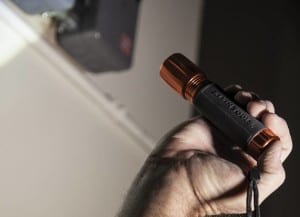
The Klein Penlight (Cat. No. 56222) is the most modest of the four lights in terms of output—a mere 36 lumens—and that is precisely the point. It is not designed to illuminate a room, to cast a beam across a yard, or to serve as a primary work light. It is designed to be a quick‑inspection tool, a light that lives in a shirt pocket, always available for the moment when you need to read a label, look into a dark opening, or trace a wire for a few seconds before moving on. The penlight is machined from aluminum with a bright orange anodized finish and a black cushion‑grip handle. The orange color makes it easy to find in a tool bag, and it is consistent with Klein's brand identity—the same orange that appears on their screwdrivers, their pliers, and their voltage testers. The tail cap switch is easy to operate with one hand, and a half‑press activates the light momentarily—useful for quick glimpses. The light uses two AAA batteries, housed in a compartment that is sealed with an O‑ring against moisture. The pocket clip is removable, and it holds the penlight securely in a shirt pocket, a sleeve pocket, or the webbing of a tool pouch. The 36‑lumen output is, at first glance, laughably low by modern standards. But in the context of its intended use, it is perfectly adequate. When you are an electrician leaning into a dark junction box, trying to read the faded label on a wire, 36 lumens is all you need. More light would create glare off the shiny surfaces and make the label harder to read, not easier. The beam is a broad flood, not a tight spot, which means it illuminates a useful area around the point of interest rather than creating a bright dot in the center of a dark field. The run time is approximately 5 hours on a fresh set of batteries, which, for a light that is used in bursts of a few seconds at a time, means it may go weeks or months between battery changes. The penlight is not an exciting product. It is a practical, well‑made tool that does exactly what it was designed to do, and it does it at a price—around $20—that makes it essentially an impulse purchase. For the electrician who needs a light that is always within reach, the Klein Penlight is an excellent choice.
The Klein Clip Light: 150 Lumens, a Magnetic Clip, and a Smartphone‑Like Form Factor
The Klein Clip Light (Cat. No. 56221) is the most innovative of the four lights, and it fills a niche that no other Klein light addresses. It is a compact, rectangular light, roughly the size and shape of a smartphone in a protective case, with six LED chips arranged in a row across the front. It produces 150 lumens on High and 50 lumens on Low, selectable via a side‑mounted pushbutton that falls naturally under the thumb when the light is held. The defining feature is a magnetic clip—a sturdy, spring‑loaded metal clip with built‑in magnets that allows the light to be attached to a shirt pocket, a belt, a tool pouch, a piece of webbing, or any ferrous metal surface. The magnets are not particularly strong—they struggled to hold the light securely on thinner painted steel surfaces—but the clip itself is robust and provides a secure mechanical grip on fabric or webbing. When clipped to a shirt pocket or a belt, the light faces forward, illuminating the area in front of the user hands‑free. For an electrician working in a dark space who needs both hands for the task, the clip light is a clever alternative to a headlamp. It provides similar hands‑free illumination without the weight and the strap of a headlamp, and it can be repositioned quickly by unclipping it and moving it to a different location. The light can also be freestanding—set on its base on a flat surface—or, with the aid of the magnets, stuck to a steel enclosure, a panel cover, or a metal stud. The rubber overmold around the sides provides drop protection and a comfortable, non‑slip grip. The light uses three AAA batteries, housed in a compartment accessed through a door on the back, and the run times are approximately 6 hours on High and 10 hours on Low. The High setting is bright enough for close‑range work and for illuminating a path when walking through a dark building. The Low setting extends run time for applications where less light is needed. The side‑mounted power switch cycles through High, Low, and Off with each press, and it is large enough to operate with gloved hands. The clip light is an unusual product, and it may not appeal to every electrician. But for those who prefer not to wear a headlamp—and there are many, for reasons of comfort, helmet compatibility, or simply personal preference—the clip light provides a viable alternative. It is also useful as a secondary light, clipped to a bag or a belt loop, always available for quick‑inspection tasks.
Klein Lighting Solutions: The Complete Lineup
| Model | Cat. No. | Output (Lumens) | Run Time (Hrs) | Batteries | Weight | Price (Approx.) |
|---|---|---|---|---|---|---|
| Headlamp | 56220 | 150 (spot) / 50 (flood) | 6 (spot) / 10 (flood) | 3 x AAA | ~3 oz | $25–$30 |
| Penlight | 56222 | 36 | 5 | 2 x AAA | ~2 oz | $20–$25 |
| Clip Light | 56221 | 150 / 50 | 6 / 10 | 3 x AAA | ~5 oz | $20–$25 |
| Slide Focus Flashlight | 56223 | 215 | 6 | 3 x AAA | ~5 oz | $25–$30 |
Conclusion: Purpose‑Built Lights for a Purpose‑Driven Trade
The Klein lighting line is not for everyone. It is not for the outdoor enthusiast who wants a thousand lumens of blinding brightness to light up a trail. It is not for the flashlight collector who values exotic materials and cutting‑edge LED technology. It is for the electrician—and, by extension, for the plumber, the HVAC technician, the maintenance professional, and any other tradesperson who works at close range, in dark enclosures, and who needs reliable, practical, affordable illumination that will not blind them with its brightness or break the bank when it inevitably gets lost or damaged. The four lights in the line cover a range of applications, from the broad versatility of the headlamp to the grab‑and‑go convenience of the penlight to the hands‑free cleverness of the clip light. They share a common design language—orange housings, neutral white beams, simple controls—that makes them feel like a cohesive family. They are built to survive the drops, the dust, and the dampness of the job site, and they are priced so that an electrician can own all four for around $100. For the professional who wants a set of lights that are designed specifically for their trade, that prioritize light quality over light quantity, and that can be used hard and replaced without regret, the Klein lighting line is an excellent choice. It is not flashy, it is not trendy, and it will not win any lumens wars. But it will help electricians do their jobs better, safer, and more comfortably, and that, ultimately, is the purpose of any good tool.
Comments 0
Leave a Comment