Fit and Sizing: Finally, a Heated Jacket That Curves Where It Should
I go between a medium and a small on my shirts and jackets and ordered a small for this heated jacket. It is comfortably snug, hugging me in all the right places. Across my shoulders, the fit is perfect, with the seams sitting just off of them. There is enough room to move but not so much that I feel like I am being swallowed. I am five‑foot‑eight, and the length is very nice on my frame. I do not have to worry about catching a cold breeze thanks to an exposed midriff. The significance of this fit cannot be overstated for women who have spent years making do with men's heated jackets. A men's jacket, sized down to a women's small, is cut for a different set of proportions. The shoulders are too wide, the chest too roomy, the waist too straight, the sleeves too long. The result is a jacket that bunches uncomfortably, that lets cold air circulate through the excess fabric, and that looks—there is no kind way to say this—like a child wearing her father's coat. The Milwaukee Women's Heated Softshell Jacket avoids all of these pitfalls. The shoulder seams align with the natural shoulder, not halfway down the bicep. The torso tapers inward at the waist, creating a silhouette that is functional—it keeps the heating elements close to the body, where they can do their work—and flattering. The sleeves end at the wrist, not at the knuckles, and the cuff design allows the wearer to choose between a standard fit and a thumbhole‑secured fit that keeps the sleeves from riding up during overhead work. The overall impression, when wearing the jacket, is that it was made for the person inside it—not for a hypothetical, universal body shape that does not actually exist.
Material and Comfort: Softshell, Wind‑Resistant, and Lined With Brushed Thermal Knit
Milwaukee did a lot of things right on the comfort side of this design. As a softshell jacket, it has much easier movement than something like a cotton duck that takes a couple of seasons to finally soften. The outer shell is made of a polyester weave that resists both wind and water. That is really helpful considering this is not a terribly bulky jacket to begin with. Some of my winter jackets require a lot more insulation or heavier material to really block the wind out. The inner side of the jacket is lined with a brushed thermal knit—a fabric that is soft against the skin, that slides easily over a base layer or a mid‑layer without bunching, and that provides a measure of passive insulation even when the heating elements are not activated. The combination of the wind‑resistant outer fabric and the thermal inner lining means that the jacket is warm even when the battery is dead or when the user chooses to conserve power by not engaging the heating elements. The heating elements themselves are the same carbon‑fiber technology that Milwaukee uses across its heated gear line. They are flexible, durable, and resistant to the fatigue that can cause wire‑based heating elements to break under repeated flexing. In this women's model, the elements are arranged in a configuration that differs from the men's Axis jacket: they cover the back and the front pockets, and they also extend into the collar, providing warmth around the neck—a particularly welcome feature on a cold, windy day, when the collar can be zipped up to the chin and the heat radiates against the carotid arteries, warming the blood as it travels to the brain. The separate controls—one button for the back elements and one for the pockets and collar—allow the wearer to customize the heat distribution. On a day when the wind is at the back, the back elements can be turned up while the front remains off, conserving battery power. On a day when the hands are cold and the neck is exposed, the pocket and collar elements can be prioritized. This granularity of control is a feature that the men's heated jackets generally do not offer, and it reflects a thoughtful approach to designing for the specific needs and preferences of the women who will wear the jacket.
Heating Performance: Quick Warm‑Up, Three Zones, and 145 Degrees at the Element Core
I realize that I am in Central Florida and the days I actually need a heated jacket are few and far between. We visit my family's horse farm in Georgia during the holidays, though. Not only does it get pretty cold in the winter, but there is also always work to do outside. For that kind of environment, this Milwaukee women's heated jacket gets plenty warm enough. Low is usually enough heat to keep me comfortable during the day, and I will kick it into medium or high once the sun goes down. If you want an exact number, FLIR's thermal camera tells me the inside temperature reaches 145 degrees Fahrenheit at the hottest point on the carbon‑fiber heating elements. Between the wind‑breaking outer and that kind of heat on the inside, winter is going to have a tough time freezing me out. The heating speed is remarkable. From the moment the button is pressed, the elements begin to warm, and within about ten seconds the temperature has climbed to approximately 100 degrees—roughly body temperature. Within a minute and a half, the elements have reached their maximum temperature of 145 degrees at the core. The heat is distributed evenly across the surface of each element, with no hot spots that could cause discomfort or, in the extreme, a minor burn, and no cold zones that would leave the wearer feeling patchily warmed. The insulation behind the elements reflects the heat back toward the body, while the wind‑resistant outer shell prevents the heat from being stripped away by moving air. The result is a jacket that feels, in operation, less like wearing a heated blanket and more like stepping into a warm room—the warmth is pervasive, enveloping, and consistent.
Thumbhole Cuffs and Overhead Mobility: A Small Trade‑Off for a Secure Fit
In general, I really like thumb‑hole cuffs to keep the sleeves from rising up when I extend my arms. The jersey‑type material the cuffs are made from is very soft and comfortable. It is not a moisture‑resistant material, even though the rest of the jacket is. That is something to keep in mind if it starts raining or snowing. The sleeve length is perfect when my arms are down or straight out. However, when I have my thumbs in the cuff holes, they restrict my overhead movement. I can either take my thumbs out and let my wrists get some exposure or use them and have the jacket ride up several inches above my waistline. To fix it, I would need longer sleeves, which would mess up the otherwise perfect fit. It is really just a limitation of using them on any jacket like this. A sweatshirt or athletic shirt that is naturally stretchy would be more flexible. The thumbhole cuff represents an inherent design trade‑off that nearly every jacket manufacturer faces. The cuff must be tight enough to stay in place around the thumb, which means it limits the upward travel of the sleeve. When the arm is raised overhead, the sleeve cannot slide up the forearm because the cuff is anchored at the thumb, so the entire jacket is pulled upward, exposing the waistband. The alternative—a loose cuff that allows the sleeve to slide freely—defeats the purpose of the thumbhole, which is to keep the sleeve in place and seal the gap between the glove and the jacket. For professionals whose work involves a great deal of overhead reaching—electricians running conduit, drywallers finishing ceilings, painters working above shoulder height—the thumb‑hole cuff may be more of a hindrance than a help. For professionals whose work keeps their arms at or below shoulder level, the thumbhole cuff is a welcome feature that eliminates the annoying creep of the sleeve up the forearm and the resulting cold gap at the wrist. The Milwaukee Women's Heated Softshell Jacket is, by its nature, a cold‑weather garment, and most cold‑weather work does not involve extensive overhead reaching. The trade‑off is reasonable, and the user can simply choose not to use the thumbholes if they interfere with the task at hand.
Pockets: Four Generously Sized, Fully Functional Compartments That Defy the Trend of Decorative Women's Pockets
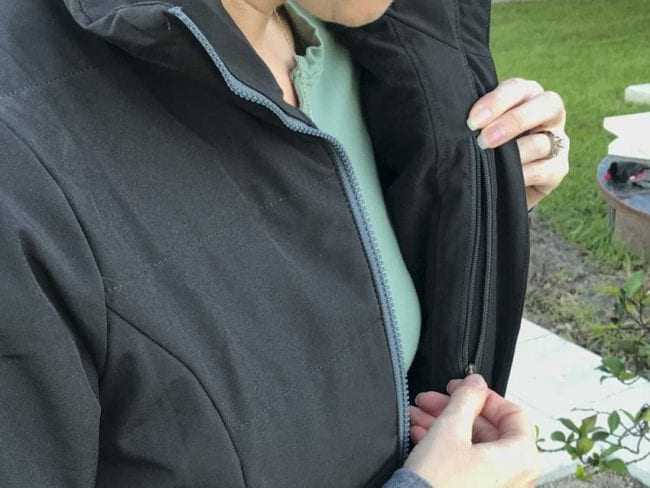
There are four pockets—two on the front, one around the back for the battery, and one on the inside chest. All of them have zipper closures. What stands out most about them is that they are all large enough to be legitimately functional. With most women's clothing, pockets are more decorative than useful, so it is nice to have pockets I can actually put stuff in. The front pockets are positioned at the natural hand‑resting point—low enough to be comfortable, high enough to be accessible when wearing a tool belt or a safety harness. They are lined with a soft, brushed fabric that is warm against cold hands, and they are large enough to hold a smartphone, a set of keys, a pair of work gloves, or a handful of fasteners. The interior chest pocket is zippered and positioned on the left side, where the wearer can access it without removing the jacket. It is sized to hold a phone or a wallet securely, and the zipper closure ensures that the contents will not fall out when the jacket is unzipped or removed. The battery pocket, positioned on the back at the waist, is the same well‑designed pocket that appears on the Axis jacket and the 3‑in‑1 system. It holds the M12 battery securely, with no sagging or bulging, and it is positioned high enough on the back that it does not interfere with sitting or leaning against a surface. The pass‑through for the power cord is reinforced, and the cord itself is routed inside the jacket, where it is protected from snagging and abrasion.
Battery, Runtime, and the USB Charging Convenience
Like the Milwaukee Axis, there are three heat zones, but this model has a different configuration. You get the back and front pockets along with the collar instead of your chest. There are two separate controls above your left chest. One gets the back elements heating and the other kicks in the pockets and collar. You feel the heat really quickly, too. It is pretty toasty—around 100 degrees Fahrenheit—in about 10 seconds and needs only a minute and a half or so to reach its maximum temperature. Milwaukee estimates you can get up to 8 hours of runtime with the 2.0‑Ah battery that comes in the kit. That is on low and likely with one heat zone on. With all the zones on high, mine runs for just shy of 3 hours. One of the other things to keep in mind is that the battery holster is also a 2.1‑A USB quick charger. That is great for when your phone is getting to the end of its charge, just keep in mind that it will lower your overall runtime. The battery holster—the M12 power source—is a small, unobtrusive device that clips onto the battery and provides the interface between the battery and the heating elements. It also features the USB port, which allows the wearer to charge a smartphone, a tablet, or any other USB‑powered device directly from the jacket. For the professional who spends the day on a job site without access to a power outlet, the ability to charge a phone from a jacket is a practical solution to a real problem. The runtime on a full charge is sufficient for a typical workday, provided that the user manages the heat settings appropriately and uses the USB charging sparingly. The M12 battery platform—the same platform that powers Milwaukee's cordless tools—means that spare batteries are readily available, and a battery that has been depleted can be swapped for a fresh one in seconds.
Care and Maintenance: Washer and Dryer Safe, With the Battery Removed
One of the really great things about today's heated gear is that you can throw it in the washer. I wash mine in warm water with like colors and tumble dry in low with no problems. The washing process requires no special handling beyond removing the battery and the battery holster before laundering. The heating elements and the associated wiring are designed to withstand the mechanical agitation and the thermal cycling of a typical home washing machine and dryer. The fabric resists pilling and fading, and the heating elements do not lose their effectiveness or change their resistance after repeated wash cycles. The jacket should be washed periodically—the manufacturer recommends doing so according to the care label—to remove the dirt, sweat, and salt that accumulate on any garment that is worn for work. The ability to launder the jacket at home, without dry cleaning or special equipment, is a significant practical advantage over some competing heated garments that require more delicate handling.
Price and Value: $169 Bare, $199 Kit, and the Cost of Staying Warm
The jacket by itself runs $169, and the kit with battery and holster—which is also the charger—runs $199. That is in line with what other heated jackets run from tool manufacturers, and I think this model has more to offer than most. The value proposition of a heated jacket is not measured solely in dollars and cents. It is measured in the number of cold days on which the wearer can work comfortably rather than miserably. It is measured in the layers of clothing that can be left in the truck because a single jacket, with active heating, replaces two or three passive insulating layers. It is measured in the productivity that is maintained—rather than lost to cold‑stiffened fingers and the constant, distracting shiver—on a freezing job site. For the professional woman who works outdoors, who has been layering up in men's jackets and making do with pockets that will not hold a phone, the Milwaukee Women's Heated Softshell Jacket is not merely a purchase. It is a declaration that her comfort, her productivity, and her professional appearance matter. It is a jacket that says, finally, that women's heated workwear deserves to be designed, not just resized. And at $199 for the complete kit, it is a declaration that does not demand a premium for the privilege of being seen.
Milwaukee Women's Heated Softshell Jacket Specifications
| Specification | Detail |
|---|---|
| Model | Milwaukee 232B‑21S |
| Power Source | Milwaukee M12 battery |
| Heat Zones | Back, collar, front pockets (2 controls) |
| Max Temperature (Element Core) | ~145°F |
| Runtime (M12 2.0 Ah) | ~3 hrs (all zones, High) up to 8 hrs (Low) |
| USB Charging | 2.1A via M12 power source |
| Outer Material | Polyester softshell, wind and water resistant |
| Inner Lining | Brushed thermal knit |
| Pockets | 4 (2 front zip, 1 interior zip, 1 battery) |
| Cuffs | Thumbhole jersey cuffs |
| Color | Black |
| Washing | Washer and dryer safe (remove battery) |
| Price | $169 bare / $199 kit |
Comments 0
Leave a Comment