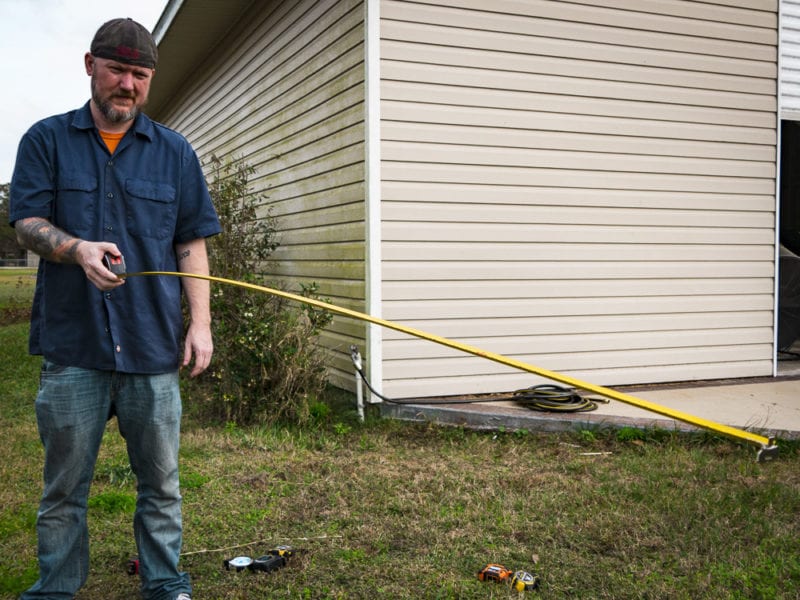
Let’s strip away the ranking and examine the Ridgid 625 on its own merits. Here’s what we found after drop‑testing it 36 times from ten feet, measuring its standout down to the inch, and living with it on our belts through framing, trim, and layout work.
Perfect Accuracy : The One Category Where the Ridgid Didn’t Flinch
If a tape measure can’t be trusted to tell the truth, nothing else about it matters-not the grip, not the coating, not the magnet strength. It becomes a random number generator clipped to your pocket. To test accuracy, we used a Lixer Master calibration tool, a precision instrument with a verified accuracy of ±0.0005 inches. Every tape in our shootout was measured against this reference at multiple points along the blade. The Ridgid passed with a perfect score. Its hook movement, blade printing, and rivet alignment were dialed in straight out of the box. There was no detectable offset, no slop that would introduce a 1/16‑inch error on an inside measurement versus an outside measurement. For a tape measure that lists for $24.39-a mid‑range price point, not a budget‑basement price-this level of accuracy is non‑negotiable, and Ridgid delivered it without any drama.
The double‑sided blade printing, which we’ll discuss more in the features section, also contributes to accuracy in use. When you’re measuring overhead or in a tight corner, being able to read the tape from either edge reduces the chance of parallax error. The blade’s nylon coating keeps the markings crisp over time, and the matte finish beneath the coating reduces glare, so you’re not misreading 11/16 as 15/16 under a bright work light. Accuracy isn’t just about factory calibration; it’s about maintaining legibility through hundreds of abrasive pulls across lumber and concrete. The Ridgid’s blade is built to stay readable, and in our testing, it did.
Durability : The Tape That Wouldn’t Die, Even After 36 Ten‑Foot Drops
Here’s where the Ridgid’s personality emerged vividly. We designed a durability test that was brutal but realistic : each tape measure was dropped, hook‑first, from the top of a ten‑foot ladder onto a concrete floor. We did this 36 times per tape. The goal wasn’t to destroy them arbitrarily; it was to simulate years of accidental drops-off a scaffold, out of a tool belt, from the top plate of a wall-compressed into a single, punishing session. As tapes failed-hooks snapped off, cases cracked open, blades refused to retract-we eliminated them from the durability round. The Ridgid was one of a handful of models that survived all 36 drops.
Let’s be clear about what “survived” means here. By the end of the gauntlet, the Ridgid tape measure looked like it had been through a war. Part of the locking mechanism had snapped off-a chunk of the plastic thumb slide was missing. The blade retraction became sluggish; the spring still worked, but it needed some manual encouragement to get the last few feet of blade back into the case. The faceplate was scuffed, the rubber overmold was gouged, and the belt clip had a slight bend. But-and this is the critical point-it still measured accurately. The hook was still attached, the blade was intact, and you could extend it, lock it, take a measurement, and retract it. On a jobsite, you could finish the day with this tape.
Ridgid achieves this durability through a steel faceplate on both the front and back of the case, combined with an impact‑resistant rubber overmolding that wraps the entire body. This is essentially a sandwich of hard metal and shock‑absorbing rubber. When the tape hits concrete, the rubber compresses first, bleeding off energy, and the steel faceplate prevents the case from cracking. The design is effective; it’s the reason the Ridgid outlasted tapes with all‑plastic or thin‑metal cases. The tradeoff, which we’ll revisit, is that all that rubber and steel makes the tape slightly heavier and bulkier than some competitors. But for a framer or concrete worker who drops their tape constantly, that weight is security.
Feature Set and Design : A Thoughtful Blend of Proven Elements
The Ridgid 625 packs a suite of features that, individually, are not unique, but together form a well‑rounded toolkit. The blade is double‑sided printed, meaning the numbers are visible from both edges. This is a feature that once you’ve used, it’s hard to go back to a single‑sided blade, especially when you’re working in an orientation where the tape is flipped or when you’re measuring from the bottom edge in a tight spot. The blade is also nylon‑coated-a protective layer that bonds to the steel and prevents the printed markings from wearing off as the blade scrapes in and out of the case and across abrasive surfaces. The coating resists chemicals, moisture, and UV exposure, extending the readable life of the tape considerably compared to uncoated blades.
The hook is a double‑sided, full‑steel design. The double‑sided aspect means it has both a top and bottom lip, so you can hook onto a surface from either direction. It’s also slotted, allowing you to drop the slot over a nail or screw head for one‑person measuring-a simple feature that every tape should have, but that some budget models omit. The hook is secured with rivets that felt tight during our testing and didn’t loosen even after the 36 drops. The hook’s movement along its slots was smooth and consistent, ensuring the tape reads correctly for both inside push measurements and outside pull measurements.
The stainless steel belt clip is a sturdy wireform design. It slides onto a tool belt or a jeans pocket easily and holds securely. We did have some concerns about its long‑term strength for users who are particularly hard on clips-the wire is thinner than some heavy‑duty competitors-but it survived our testing without breaking. It’s a functional clip that does its job without fanfare. The tape also features a built‑in shock bumper, a small rubber pad positioned where the hook impacts the case during retraction. This bumper absorbs the energy of the hook slamming home, reducing the stress on the rivets and the blade tip over thousands of measurement cycles. It’s a small detail that quietly extends the tape’s lifespan.
Ergonomics : A Grip That Feels Like It Was Molded for Your Hand
Where the Ridgid genuinely outshines several higher‑finishing competitors is in how it feels to hold. Tape measures are peculiar ergonomic objects : you grip them tightly, often one‑handed, while extending and retracting the blade, locking it, and sometimes scribing with a pencil held in the same hand. A tape that feels awkward or blocky becomes a source of constant low‑level irritation. The Ridgid’s rubber overmold wraps the entire case and is contoured with a subtle palm swell that naturally aligns with the curve of your hand. The anti‑slip texture provides grip even when your hands are dusty or damp. The lock button is positioned within easy reach of your thumb, so you don’t have to adjust your grip to engage it. The overall width and height of the case are balanced, so it doesn’t feel like you’re holding a brick. In our testing, several testers independently commented that the Ridgid was simply the most comfortable tape to use during long layout sessions. That comfort translates to less hand fatigue and faster, more fluid measuring over the course of a day.
The Two Shortcomings That Held the Ridgid Back : Standout and Throw
No tool is perfect, and the Ridgid 625 has two specific performance metrics that prevented it from climbing higher in our rankings : blade standout and blade throw.
Standout is the maximum horizontal distance a blade can extend unsupported before it buckles and collapses. For professional framing and sheet‑good layout, we consider 8 feet of standout to be the baseline-it’s the length that lets you reach across a standard sheet of plywood or OSB, or span a stud bay, without walking back and forth or asking for a helper. The Ridgid falls a few inches short of that 8‑foot mark. In our testing, it consistently buckled around 7 feet, 6 to 8 inches. That’s not terrible-it’s better than many consumer‑grade tapes-but six other models in our shootout provided more standout. For a trim carpenter or cabinet installer who rarely needs to span more than 4 feet, this is a non‑issue. For a framer or drywaller who constantly stretches the tape across open air, those missing inches mean the difference between hooking the far edge in one motion and having to scoot closer or support the blade with a hand midway.
Throw is related but distinct : it’s the distance the blade can travel while being pushed out of the case by the internal spring, useful for quickly feeding the blade across a surface without pulling it. We like to see at least 8 feet of throw, which again covers sheet goods. The Ridgid delivers a throw of 100 inches-that’s 8 feet, 4 inches-which technically meets our threshold. However, six competing models posted even longer throw numbers, some exceeding 10 feet. The Ridgid’s throw is adequate, but it’s not class‑leading, and in a tight field, being “adequate” in a performance metric can drop you a few spots.
The standout and throw performance is partly a consequence of the blade’s width and steel thickness. The Ridgid uses an extra‑wide 1‑1/16‑inch blade, which aids visibility and rigidity but adds weight that the internal spring must overcome during retraction. The tradeoff appears to have been optimized toward durability and comfortable retraction rather than maximum standout. It’s a conscious engineering choice, and whether it matters to you depends entirely on how you use your tape.
Value : $24.39 Buys a Lot of Tape, but the Competition Is Relentless
The Ridgid 625 carries a retail price of $24.39. In a vacuum, that feels reasonable for a tape measure with double‑sided printing, nylon coating, a steel‑and‑rubber case, and proven durability. But we didn’t test in a vacuum; we tested against eight other tapes, many of which offer equal or better standout, longer throw, or additional features, at lower or comparable prices. The Milwaukee Stud, for example, is more expensive but survived the same 36 drops with less visible damage and offers greater standout. The DeWalt Tough Series is similarly priced and outperformed the Ridgid in standout and throw. Several budget‑friendly models from Lufkin and Stanley delivered nearly the same accuracy and durability for $10‑$15 less. The Ridgid’s value proposition, then, is slightly muddied. You’re paying for the brand’s reputation, the over‑built case, and the ergonomic design. If those are your priorities, the price is justifiable. If you’re buying by the spec sheet alone, there are options that give you more headline numbers for fewer dollars.
Real‑World Testing : What It’s Like to Use the Ridgid 625 Daily
We clipped the Ridgid 625 onto our belts and used it across a variety of tasks : framing a small addition, laying out a deck, installing kitchen cabinets, and cutting trim. In framing, the standout shortfall was noticeable. When reaching across a stud bay to hook the far plate, the blade would often buckle just before reaching the far side, requiring a second, closer hook. This wasn’t a dealbreaker-it just added a few seconds to each measurement cycle. In deck layout, where we were repeatedly measuring joist spans, the double‑sided blade and comfortable grip were assets; we could read the tape from either side without flipping it. The throw was sufficient for pushing the blade across the deck boards without snagging. For cabinet install, the standout didn’t matter at all-we were measuring distances under 4 feet almost exclusively-and the tape’s accuracy and legibility were the stars. The nylon coating survived a day of scraping against plywood edges and dusty subfloors with no visible wear. The belt clip held firm on our tool belts through climbing, kneeling, and crawling. After a full week, the tape was functionally unchanged from its out‑of‑the‑box state, except for some superficial scuffs on the rubber overmold, which is exactly what you’d expect from a well‑built daily driver.
Who Should Buy the Ridgid 25‑Foot Tape Measure?
The Ridgid 625 is best suited for professionals who prioritize accuracy, durability, and comfort over maximum standout. Specifically :
- Finish carpenters and cabinet installers : You rarely need more than 4 feet of standout. You will appreciate the double‑sided blade, the comfortable grip, and the nylon coating that keeps the blade legible even when it’s dragged across rough stock. The accuracy is impeccable, which matters when you’re making cuts to the 1/32 inch.
- General contractors and remodelers : You need one tape that does a bit of everything. The Ridgid is tough enough to survive repeated drops, accurate enough for layout, and comfortable for all‑day use. The standout limitation is manageable if you don’t frame entire houses daily.
- DIYers and home enthusiasts : If you want a professional‑grade tape that will last years and feels great in the hand, the Ridgid is a solid choice. The price is a step above entry‑level, but you’re getting entry‑level‑proof durability and perfect accuracy.
Who might look elsewhere? Production framers and drywallers who rely on long, unsupported spans multiple times per minute should prioritize tapes with 10‑foot‑plus standout, even at the cost of some ergonomic comfort or a higher price. If standout is your primary metric, the Ridgid won’t satisfy. Also, budget‑conscious buyers who go through tapes quickly and don’t want to invest more than $15 per unit will find acceptable alternatives from Lufkin or Stanley at lower cost.
Ridgid 625 Tape Measure Specifications
| Specification | Detail |
|---|---|
| Model | Ridgid 625 |
| Length | 25 feet |
| Blade Width | 1‑1/16 inches (extra wide) |
| Blade Markings | 1/16‑inch increments, double‑sided printing |
| Blade Coating | Nylon‑coated, matte finish |
| Hook | Double‑sided, full‑steel, slotted for nail |
| Case Construction | Stainless steel faceplates (front & back) with full‑surround anti‑slip rubber overmold |
| Belt Clip | Stainless steel wireform |
| Standout (Tested) | ~7 ft 6‑8 in (just under 8 ft) |
| Throw (Tested) | 100 inches (8 ft 4 in) |
| Lock Mechanism | Thumb slide lock |
| Shock Bumper | Built‑in rubber bumper at hook impact point |
| Warranty | Limited Lifetime |
| Price | $24.39 |
What We Liked and What We Didn’t
What We Liked :
- Perfect accuracy out of the box; among the best in the shootout.
- Durability is exceptional : survived 36 ten‑foot drops, still functional.
- Extremely comfortable ergonomic grip with anti‑slip rubber overmold.
- Double‑sided, nylon‑coated blade for versatility and longevity.
- Steel faceplates and shock bumper add to the overall ruggedness.
- Double‑sided, slotted hook for nail‑hanging convenience.
What We Didn’t Like :
- Standout is below the 8‑foot benchmark; limits solo long‑span work.
- Throw, while adequate, is outperformed by six competitors.
- Lock mechanism partially broke off during drop testing (still functional, but concerning).
- Price of $24.39 makes it a harder value sell against both cheaper and equally‑priced competitors with better standout.
- Steel belt clip feels slightly thinner than some heavy‑duty alternatives.
The Verdict : A Contender Hiding in the Middle of the Pack
The Ridgid 25‑Foot Tape Measure finished seventh in our nine‑tape shootout, but if you read only that, you’d miss the nuances of a tool that impressed us in categories that don’t always photograph well but matter deeply on the job-accuracy, comfort, and the stubborn refusal to die. Its spot in the ranking was dragged down by a standout that just misses the professional threshold and a value proposition that’s hard to defend when cheaper tapes offer more reach. But no other tape in our test simultaneously nailed accuracy with a perfect score, survived 36 ten‑foot drops, and felt as natural in the hand as the Ridgid did.
For the finish carpenter who prizes a tape that reads true, grips like an extension of the hand, and can be dropped repeatedly without catastrophic failure, the Ridgid 625 is an excellent choice. For the framer who needs a tape to fly across a sheet of OSB and hook the far edge without buckling, it will frustrate. For the contractor who wants a single do‑everything tape, it’s a credible option that leans slightly toward the precision‑work end of the spectrum. We’re keeping it on our belt for cabinet installs and trim work, where its blend of accuracy and ergonomics shines, and reaching for a standout champion when it’s time to frame. That might sound like a compromise, but it’s really a recognition that the tape measure market has become so specialized that a top‑five finish in a broad shootout requires excelling at everything-and the Ridgid, while excellent, excels at the things that some trades value more than others.
You can find the Ridgid 625 at Home Depot and other retailers. At $24.39, it’s an investment in a tape that will tell you the truth for years, as long as you can live with a standout that stops just shy of the magic number. For many of us, that’s a trade worth making.
Comments 0
Leave a Comment