The Forged Foundation: Steel, Heat Treatment, and the Hot Rivet
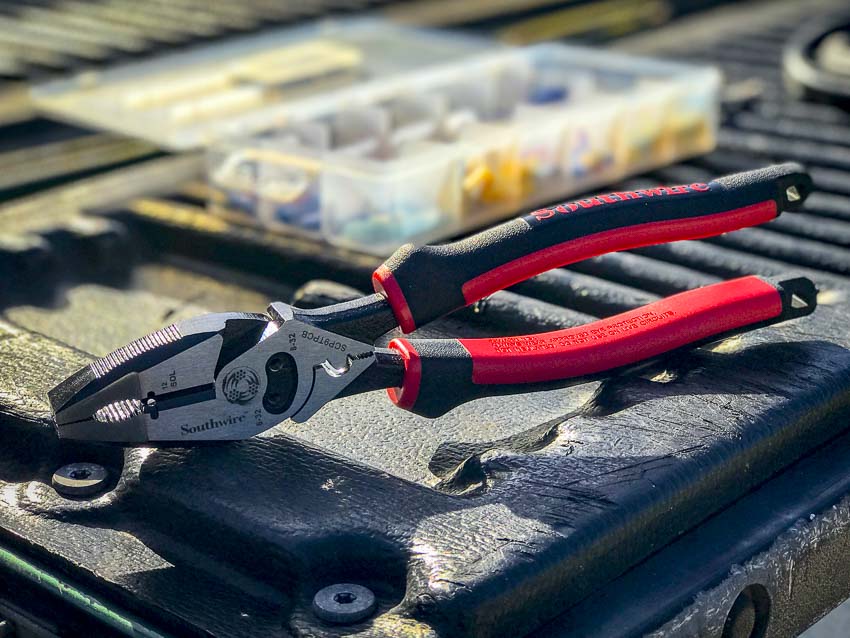
Before enumerating the eight functions, it is worth pausing to examine the foundation upon which they are built. The SCP9TPCB is a forged tool, made from heavy‑duty steel that has been drop‑forged into shape and then machined to its final dimensions. The forging process, as I have discussed in other reviews, aligns the internal grain structure of the steel along the contours of the tool, providing maximum strength in the directions of stress. The pivot is a hot rivet—the traditional method of joining plier halves that Southwire has embraced across its professional line—and it provides a smooth, tight action with no side‑to‑side play. The handles are 6 inches long, providing good leverage, and they are finished with a dipped grip that resists chemicals and provides a secure, non‑slip surface. Tether holes are punched into both handle ends for users who work at height and need to secure their tools against falls. The overall weight and balance of the tool are consistent with a pair of 9‑inch linesman pliers—substantial, but not so heavy that they cause fatigue during normal use. In short, the SCP9TPCB feels like a quality tool, regardless of how many functions it purports to perform. This is a critical point. A multi‑tool that is built on a flimsy platform will be a poor performer in all of its functions. A multi‑tool that is built on a solid, professional‑grade platform will be at least acceptable in most of its functions, and excellent in some. The SCP9TPCB falls into the latter category.
Function 1: The Reaming Head
At the very tips of the jaws, where the two halves of the pliers meet when closed, Southwire has machined a knurled, slightly tapered section that serves as a reaming head. Reaming is the process of removing burrs from the inside of a freshly cut pipe, creating a smooth, slightly flared opening that is ready for the insertion of wire or the application of cement. It is a task that electricians perform on virtually every piece of conduit they install. A dedicated reamer—a separate tool with a hardened, tapered steel cone and a handle—is the ideal tool for the job, but carrying a dedicated reamer consumes a slot in the pouch. The reaming head on the SCP9TPCB is a compromise: it is not as effective as a dedicated tool, but it is always available, because it is built into the pliers that the electrician is already carrying. The knurled surface grips the inside of the pipe as the tool is rotated, and the tapered shape gradually enlarges the opening and removes the burr. The reaming ridges start at roughly 7/8 inch, which means the reaming head is effective on conduit sizes from about 1 inch and above. On smaller conduit, the user will need a different reaming method. But for 1‑inch and larger conduit—the sizes that are most commonly encountered in commercial and industrial work—the SCP9TPCB's reaming head is a convenient, always‑at‑hand solution that eliminates the need to carry a separate tool.
Function 2: Knurled Jaw Tips
Forward of the reaming head, but still at the jaw tips, Southwire has machined an aggressive cross‑pattern knurling onto the inside faces of the pliers. This knurling serves as the gripping surface for the needle‑nose function—the fine, precise gripping that is needed when pulling a single wire through a bundle, twisting conductors together, or holding a small component while it is being fastened. The cross‑pattern provides more grip than standard straight serrations, reducing the tendency for the workpiece to slip sideways under twisting force. For the electrician who frequently twists solid conductors together before capping them with a wire nut, the knurled jaw tips provide a firm, non‑slip purchase that makes the twisting process faster and more secure. For the electrician who needs to pull a fish tape or a wire through a conduit, the knurled tips provide the grip strength needed to pull effectively without damaging the wire insulation. The jaws are not as slender as those on a dedicated needle‑nose pliers, so the SCP9TPCB will not replace a true long‑nose tool for the tightest spaces. But for the majority of gripping and pulling tasks, the jaw tips are more than adequate.
Function 3: Bolt Head Pliers
Just behind the knurled jaw tips, the SCP9TPCB incorporates a section of outward‑curved jaw that is designed to grip the heads of bolts. This is a feature borrowed from the linesman pliers that are a staple of every electrician's tool pouch. The curved section provides a secure, three‑point grip on a hexagonal bolt head, allowing the user to tighten or loosen bolts without switching to an adjustable wrench or a socket. The capacity is limited by the jaw opening; the SCP9TPCB can effectively grip bolt heads up to about 1/4 inch. Larger bolts will not fit or will not be securely gripped. For the small fasteners that are common in electrical work—the bolts that hold junction boxes to studs, the screws that secure panel covers, the hardware on cable clamps—the bolt head pliers function is a useful convenience that saves the time and effort of retrieving a separate wrench.
Function 4: 12 AWG Solid Wire Stripper
The SCP9TPCB includes a single wire stripping hole, sized for 12 AWG solid wire. This is a deliberate, focused choice. Southwire could have included multiple stripping holes—many pliers do—but doing so would have consumed space that was needed for the other functions. By choosing one size, and choosing the size that is most commonly used in residential and commercial branch circuit wiring, Southwire made a pragmatic trade‑off. The 12 AWG stripping hole is precisely machined, and it strips the insulation cleanly without nicking the copper conductor. For an electrician who works primarily with 12 AWG—which describes the vast majority of residential and commercial branch circuits—the single stripping hole is sufficient for most of the wire they touch. For other wire sizes, a dedicated pair of wire strippers, with their full range of stripping holes, will be necessary. The SCP9TPCB is not a replacement for a dedicated wire stripper; it is a supplement that handles the most common wire size in a tool that the electrician is already carrying.
Function 5: Side Cutters
The cutting function on the SCP9TPCB is provided by induction‑hardened side cutting knives positioned just forward of the pivot. These knives are the same style as those found on standard linesman pliers: two straight, opposing blades that meet at the centerline of the tool. The induction hardening process creates a durable, wear‑resistant edge that can cut through standard copper wire, aluminum wire, small steel fasteners, and—critically—ACSR (aluminum conductor steel‑reinforced) cable. ACSR is a notoriously tough material that quickly dulls unhardened cutting edges. The SCP9TPCB's hardened knives are up to the task, at least for occasional cuts. For an electrician who cuts ACSR regularly, a dedicated pair of heavy‑duty cutters with even more robust blades may be preferable, but for the occasional ACSR cut, the SCP9TPCB performs adequately. The knives are straight, not curved—a design choice that prioritizes cutting force over the grip‑and‑shear action of curved blades. For most wire cutting tasks, straight knives are perfectly effective, and the 6‑inch handles provide sufficient leverage to make clean, one‑handed cuts through 12 AWG and 10 AWG wire. Larger conductors—8 AWG and above—will require two hands or a dedicated larger cutter.
Function 6: Bolt Shears
Recessed under the pivot are two threaded holes that serve as bolt shears for 6‑32 and 8‑32 machine screws. This is a standard feature on most electrician's pliers, and it is one of those small conveniences that, once you have used it, you miss when it is absent. When an electrician is mounting a device, installing a cover plate, or securing a component, the screws that come with the device are often too long for the application. Rather than waste time searching for a shorter screw, the electrician can insert the screw into the appropriate shear hole, squeeze the pliers, and cleanly cut the screw to the desired length. The 6‑32 and 8‑32 sizes cover the most common machine screws encountered in electrical work. The shear holes are precisely threaded to support the screw during cutting, preventing the threads from being crushed or deformed. The cut end is clean, with no burr that would prevent the screw from threading into a nut or a tapped hole. This is a feature that sees infrequent use—an electrician may go days without cutting a screw—but when it is needed, it saves time and frustration.
Function 7: Terminal Crimper
Below the bolt shears, on the handle side of the pivot, Southwire has machined a terminal crimper. This is a small, precisely shaped indentation that is designed to compress a standard electrical terminal—a spade, ring, or butt connector—onto the stripped end of a wire. The crimper is positioned close to the pivot, which means that the user's hand force is multiplied by the mechanical advantage of the handles. The resulting crimp is firm, consistent, and secure. For the electrician who terminates control wiring, installs switches and outlets with crimp‑on terminals, or repairs equipment with spade and ring connectors, the crimper function is a genuine time‑saver. It eliminates the need to carry a dedicated crimping tool or to use the less‑effective "squeeze with the plier tips and hope for the best" method. The crimper on the SCP9TPCB is not adjustable and does not accommodate all terminal sizes, but for the standard red, blue, and yellow insulated terminals that are most common in electrical work, it functions well. The 6‑inch handles provide enough leverage to produce a tight, cold‑welded crimp that will resist pull‑out and maintain good electrical conductivity over time.
Function 8: Fish Tape Puller
Below the crimper, near the joint where the handles meet the dipped grips, Southwire has formed a fish tape puller—a narrowed, grooved section that is designed to grip the flat steel tape that electricians use to pull wire through conduit. Fish tape is notoriously difficult to grip with bare hands, especially when it is coated in pulling lubricant. The fish tape puller on the SCP9TPCB provides a mechanical advantage, allowing the user to squeeze the handles and lock the tape securely between the grooved surfaces, then pull with considerably more force than is possible with the fingers alone. This is a feature that sees use primarily during the rough‑in phase of electrical work, when conduit is being filled with wire. For the electrician who spends their days pulling wire, the convenience of having a fish tape puller integrated into the pliers they are already carrying is significant. It eliminates the need to carry a separate pulling grip or to resort to wrapping the slippery fish tape around the pliers and hoping it does not slip.
Southwire Side Cutting Combo Pliers SCP9TPCB Specifications
| Specification | Detail |
|---|---|
| Model | Southwire SCP9TPCB |
| Overall Length | 9 inches |
| Handle Length | 6 inches |
| Material | Forged steel |
| Pivot | Hot rivet |
| Functions | 8 (reaming, knurled jaw tips, bolt head pliers, 12 AWG wire stripper, side cutters, 6‑32/8‑32 bolt shears, terminal crimper, fish tape puller) |
| Price | ~$37 |
Conclusion: A Multi‑Tool That Earns Its Place
The Southwire Side Cutting Combo Pliers SCP9TPCB is not a tool for every electrician, and it is not a magic wand that will replace every other tool in the pouch. What it is, is a thoughtfully designed, well‑built multi‑tool that consolidates eight common functions into a single pair of pliers, reducing the weight and clutter that a professional must carry. It is built on a forged steel platform with a hot‑riveted pivot, and it feels like a quality tool in the hand. The individual functions are, in most cases, slightly less effective than the dedicated tools they replace—the reaming head is not as good as a dedicated reamer, the single wire stripping hole is not as versatile as a full set of strippers—but the convenience of having all of these functions in one tool that is always on the belt compensates for the slight performance trade‑offs. For the electrician who works primarily in residential and light commercial settings, where the fastener and wire sizes are relatively consistent, the SCP9TPCB can genuinely replace several tools in the pouch and speed up the workflow. For the industrial electrician who encounters a much wider variety of fasteners and wire sizes, the SCP9TPCB is a supplement, not a replacement, but it is still a useful tool to have on the belt for the tasks it covers. At around $37, it is priced competitively with other premium multi‑tool pliers, and it carries Southwire's lifetime warranty. If the idea of consolidating eight tools into one appeals to you, and you are willing to accept the modest trade‑offs that come with multi‑tool design, the Southwire Side Cutting Combo Pliers deserve a place on your belt.
Comments 0
Leave a Comment