The Hardware: Rugged, Waterproof, and Built for the Job Site
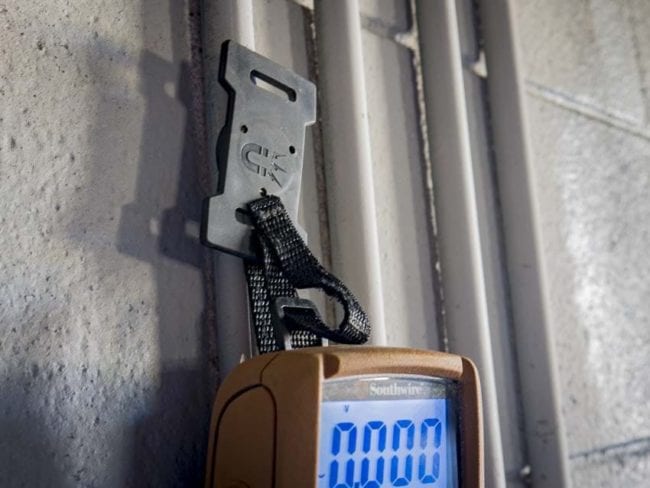
Southwire built the TechnicianPro series to a standard of durability that is uncommon in the multimeter market. The housing is a double‑molded, impact‑resistant polymer with a rubber overmold that absorbs shock and provides a secure grip. The seals around the battery compartment, the test lead jacks, and the rotary switch are designed to achieve an IP67 rating—completely dust‑tight, and capable of surviving immersion in water up to one meter for 30 minutes. Southwire has demonstrated this capability in promotional videos that show a TechnicianPro meter being covered in mud and then hosed off, still functioning perfectly. For the electrician who works outdoors, in wet conditions, in dusty environments, or who simply wants a meter that will survive being dropped into a puddle or left out in the rain, the IP67 rating provides a level of confidence that a standard, non‑ruggedized meter cannot match. The display is a large, backlit LCD with 6,000‑count resolution, a 40‑segment analog bar graph, and large, legible digits. The backlight illuminates both the display and the rotary switch positions, making the meter usable in complete darkness without a separate flashlight—though an integrated work light on the top edge of the meter provides additional illumination for the work area when needed. The meter includes a kickstand for bench‑top use, and a magnetic hanging strap that allows the meter to be suspended from a steel panel or a junction box, keeping it within the user's line of sight while both hands are free for probing. The test leads are high‑quality, silicone‑insulated leads with sharp, gold‑plated probes. The meter is powered by four AAA batteries, which are included, and it features an auto‑power‑off function that conserves battery life after 15 minutes of inactivity. The meter measures AC and DC voltage, AC and DC current, resistance, continuity, diode forward voltage, capacitance, frequency, duty cycle, and temperature (via the included K‑type thermocouple probe). It is a True‑RMS meter, which means it accurately measures the root‑mean‑square value of an AC waveform, even if the waveform is distorted or non‑sinusoidal—a critical capability for troubleshooting modern electronic loads, variable‑frequency drives, and other non‑linear equipment. The Low‑Z (low impedance) function places a low‑impedance load across the test leads, which bleeds off capacitively coupled "ghost" voltages that can produce false readings on high‑impedance meters—a feature that is essential for distinguishing between real, hazardous voltages and harmless phantom voltages that can lead to misdiagnosis.
Bluetooth and the MApp Mobile Application: Safety, Documentation, and Connectivity
The Bluetooth connectivity of the 14090T is not a gimmick. It addresses genuine, practical problems that electricians face regularly. The most obvious benefit is safety. When measuring voltage on a live circuit—particularly on high‑energy circuits like the service entrance of a building—the ability to read the measurement from a smartphone that is several feet away, rather than from the meter's display while holding the test leads, reduces the electrician's exposure to the hazard. The user can connect the test leads, step back to a safe distance, and monitor the readings on the phone. If the circuit is found to be energized, the user is not standing directly in front of the meter, which is positioned near the arc flash boundary. The second benefit is efficiency. When testing a circuit that requires the user to be in two places at once—for example, identifying which breaker controls a particular outlet—the Bluetooth connection allows the user to plug the meter into the outlet, walk to the panel, and watch the phone display as breakers are switched off. The moment the voltage reading drops to zero, the correct breaker has been found. This eliminates the need for a second person, a walkie‑talkie, or multiple trips between the panel and the outlet. The third benefit is documentation. The MApp application can record measurements over time, capturing a data log that can be reviewed later. The user can attach photographs, GPS location data, and text notes to each measurement. The recorded data can be organized into projects, saved, and exported as a PDF report or a CSV spreadsheet. For an electrician who needs to document that a circuit was tested and found to be within specifications, or who needs to provide a report to a client, an inspector, or an insurance company, the MApp integration turns the multimeter into a comprehensive documentation tool. The app allows the user to change the meter's function remotely—switching from AC voltage to resistance, for example—without touching the meter. This is particularly useful when the meter is positioned in a hard‑to‑reach location or when the user is monitoring the meter from a distance and needs to change the measurement mode without approaching the hazard zone.
Limitations, the Missing Current Probe, and the Competitive Landscape
The TechnicianPro Bluetooth Multimeter is not a clamp meter, and it does not measure current above 10 amps directly. For electricians who routinely measure higher currents—on motor circuits, service entrances, or industrial equipment—a clamp meter accessory or a dedicated clamp meter is necessary. Southwire does not currently offer a Bluetooth‑compatible current probe that integrates with the TechnicianPro, which limits the meter's utility for some applications. Fluke and FLIR offer Bluetooth‑enabled multimeters that are compatible with external current probes, but those systems are significantly more expensive. The Fluke 3000 FC with Fluke Connect retails for approximately $269, and the FLIR DM91 Bluetooth multimeter is around $275. The Southwire TechnicianPro, at $149, is priced substantially below these competitors, while offering a comparable—and in some respects, superior—feature set. The IP67 rating, in particular, is a differentiator that the more expensive competitors do not match. For the electrician who does not require high‑current measurement, or who is willing to carry a separate clamp meter for those applications, the TechnicianPro Bluetooth Multimeter offers exceptional value.
Southwire TechnicianPro Bluetooth Multimeter Specifications
| Specification | Detail |
|---|---|
| Model | 14090T |
| Functions | AC/DC Voltage, AC/DC Current, Resistance, Continuity, Diode, Capacitance, Frequency, Duty Cycle, Temperature, Low‑Z, True‑RMS |
| Safety Rating | CAT IV 600V / CAT III 1000V, UL Listed |
| IP Rating | IP67 (dust‑tight, waterproof) |
| Display | 6,000‑count backlit LCD with analog bar graph |
| Bluetooth | Yes, Southwire MApp |
| Power | 4 × AAA (included) |
| Auto Power Off | After 15 minutes of inactivity |
| Weight | 0.85 lbs |
| Included | Test leads, temperature probe, magnetic strap, case, batteries |
| Price | $149 |
Conclusion: A Connected, Rugged, and Affordable Professional Multimeter
The Southwire TechnicianPro Bluetooth Multimeter is a tool that reflects a deep understanding of how electricians actually work. It is built to survive the dirt, the water, and the drops of a real job site. It provides accurate, True‑RMS measurements with the safety of a CAT IV 600V rating. It connects to a smartphone, enabling remote monitoring, efficient troubleshooting, and comprehensive documentation. And it does all of this at a price that is accessible to a wide range of professionals, not just those with the budget for premium, name‑brand instruments. The absence of a current probe accessory is a limitation, and electricians who measure high currents daily will need a complementary tool. But for the majority of electrical work—the troubleshooting, the verification, the installation and commissioning of branch circuits and control systems—the TechnicianPro Bluetooth Multimeter is a powerful, durable, and cost‑effective instrument. It is a tool that makes the electrician's work safer, faster, and better documented, and it represents a meaningful step forward in the evolution of the digital multimeter.
Comments 0
Leave a Comment